
Tree Cabling & Support Services in Portland, OR
Not every tree with a structural defect needs to be removed. In many cases, a healthy tree can remain safe and stable for years with the right support system in place. Tree cabling and bracing are specialized preservation techniques used to reduce the risk of failure in trees that have weak branch attachments, split trunks, or structural weaknesses that make them more vulnerable during storms.
At Portland Tree Service, we provide professional tree cabling and support services throughout Portland, Boring, Gresham, Sandy, and surrounding Oregon communities. With decades of experience working with mature Pacific Northwest trees, we help property owners protect valuable trees while reducing safety risks and extending their lifespan.
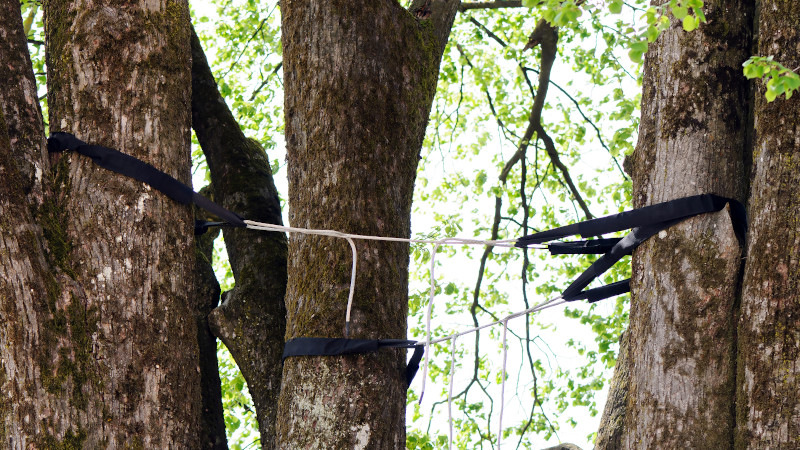
What Is Tree Cabling?
Tree cabling is a preventative support system designed to help trees withstand the stresses caused by wind, heavy foliage, snow, and seasonal weather conditions. Instead of removing a structurally compromised tree, strategically installed cables help redistribute stress between major limbs and reduce excessive movement within the canopy.
Many mature trees develop structural weaknesses as they age. Multiple trunks, long heavy limbs, and weak branch unions can increase the likelihood of failure during severe weather. Cabling provides additional support while allowing the tree to continue growing naturally.
Tree cabling is commonly used for:
- Mature trees with heavy lateral limbs
- Trees with weak branch attachments
- Multi-stem trees with included bark
- Trees showing early structural stress
- Historically significant or valuable landscape trees
- Trees located near homes, driveways, or gathering areas
Our goal is to preserve healthy trees whenever possible while improving overall safety and stability.
Dynamic Tree Support Systems
Dynamic support systems use flexible synthetic cables that move naturally with the tree. Unlike rigid support methods, these systems allow controlled movement while helping distribute loads during wind events and seasonal weather changes.
As a tree moves in the wind, the support system moves with it. This flexibility allows the tree to continue developing natural strength while providing additional protection against sudden failures.
Dynamic systems are often recommended for younger or healthy mature trees that need supplemental support but still retain good structural integrity. They are commonly used in Portland’s residential neighborhoods where large shade trees contribute significant landscape value and environmental benefits.
Static Tree Support Systems
Static support systems use steel cables and hardware to provide more rigid structural reinforcement. These systems are often installed when a tree has more significant defects, such as split trunks, weak unions, or heavy limbs that require stronger stabilization.
Static cabling limits excessive movement between structural components and can help prevent worsening damage during storms. In some cases, static systems are combined with bracing rods to provide additional reinforcement in critical areas.
Our team carefully evaluates the condition of each tree before determining whether a dynamic or static system is the most appropriate solution.
When Tree Bracing May Be Necessary
Tree bracing is often used alongside cabling when structural defects extend beyond what cables alone can support. Bracing rods are installed through weak branch unions, split stems, or compromised trunk sections to improve stability and reduce the likelihood of separation.
We commonly recommend bracing for:
- Split trunks
- Cracked branch unions
- Multiple stems with weak attachments
- Trees recovering from storm damage
- Mature trees with structural defects
In many situations, bracing allows a tree to remain safely in place rather than requiring complete removal. This can be particularly valuable for large, established trees that provide shade, privacy, and aesthetic value to the property.
Tree Support Systems for Oregon Weather Conditions
The Pacific Northwest presents unique challenges for tree stability. Prolonged rainfall, saturated soil, strong winter winds, and occasional snow or ice accumulation can place significant stress on mature trees.
We frequently see structural failures occur in trees that otherwise appear healthy. Weak branch attachments and co-dominant stems often remain unnoticed until severe weather exposes the problem. Installing a support system before failure occurs can significantly reduce the risk of property damage and tree loss.
Throughout Portland and Clackamas County, many mature maples, oaks, firs, and ornamental trees benefit from proactive support systems that help them withstand seasonal weather conditions more effectively.
Why Early Intervention Matters
Many structural defects become more difficult and expensive to address after damage has already occurred. Early evaluation and support installation can help protect both the tree and surrounding property.
Potential benefits of cabling and bracing include:
- Reduced risk of branch failure
- Improved structural stability
- Extended lifespan of valuable trees
- Lower likelihood of storm damage
- Preservation of mature landscape trees
- Reduced need for premature tree removal
Addressing structural concerns early often provides more options than waiting until significant damage develops.
Why Property Owners Choose Portland Tree Service
Property owners throughout Portland, Boring, and nearby Oregon communities trust Portland Tree Service because we focus on preserving healthy trees whenever possible. Our recommendations are based on the actual condition of the tree, not a one-size-fits-all approach.
With more than 30 years of experience working with Pacific Northwest tree species, we understand how local weather patterns, growth habits, and environmental conditions influence tree stability. Whether a tree requires dynamic cabling, static support, bracing, or ongoing monitoring, we develop solutions designed to improve safety while maintaining the long-term health of the tree.
Frequently Asked Questions
Tree cabling uses cables to support limbs and reduce movement between branches, while bracing uses steel rods installed within the tree to reinforce weak or damaged structural areas. The two systems are often used together when additional support is needed.
In many cases, yes. If a tree is healthy but has a structural weakness, cabling and bracing may provide enough support to safely preserve the tree for many years.
The lifespan depends on the type of system, tree growth, and environmental conditions. Regular inspections are recommended to ensure the system continues functioning properly as the tree develops.
No. Some trees may benefit more from pruning, while others may require removal if the structural defects are too severe. A professional assessment helps determine the most appropriate solution for each tree.