Did you know that a single street tree with a 312-square-foot canopy can increase your home’s value by an average of $7,593? While these towering specimens define our local landscape, they also bring significant responsibility and, during PNW windstorms, a fair amount of anxiety. You likely value the beauty of our community but feel overwhelmed by the complex regulations surrounding West Linn tree removal. It’s stressful to worry about a hazardous Douglas fir threatening your roof while simultaneously fearing a city fine for an unpermitted project.
This guide helps you confidently manage your property by breaking down strict municipal codes and identifying the safest technical methods for hazardous removals. We’ll explore specific permit triggers like the 6-inch DBH rule for Oregon White Oaks, explain the 30-business-day application timeline, and discuss when specialized crane services are the only way to ensure a safe, impact-free result for your landscape. By the end of this article, you will have a clear roadmap for keeping your property both compliant and secure.
Key Takeaways
- Identify whether your tree requires a permit by mastering DBH measurements and recognizing West Linn’s three most protected local species.
- Avoid administrative delays by planning your project around the city’s 30-business-day permit processing and appeal window.
- Learn the proper way to mark your property with flagging tape and site maps to ensure a successful inspection by the City Arborist.
- Discover how utilizing professional crane services for your West Linn tree removal preserves your landscape and protects sensitive areas like septic fields.
- Understand the technical difference between traditional felling and precision crane removal for hazardous trees in tight backyard spaces.
Understanding West Linn’s Tree Removal Regulations and Protected Species
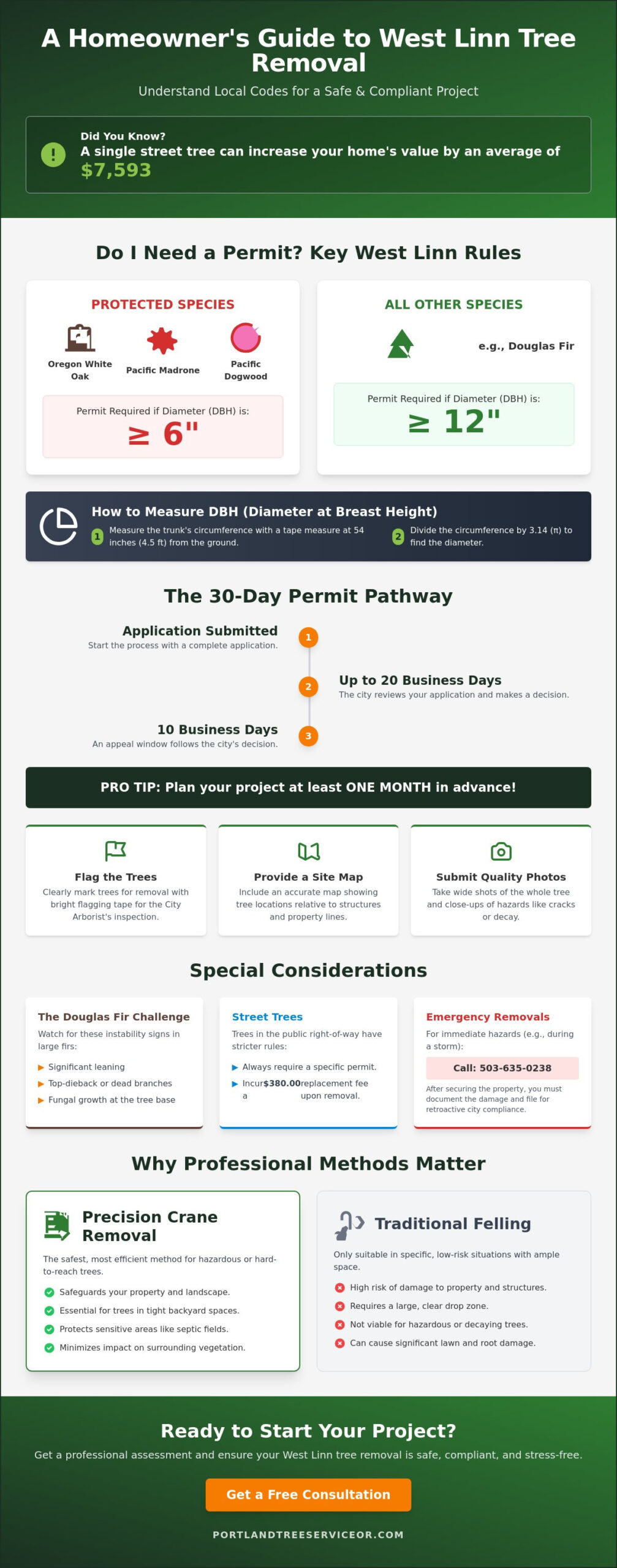
West Linn’s urban forest is governed by Code 8:17, a set of regulations designed to preserve the city’s unique environmental character. Unlike the broader rules in Portland or Lake Oswego, West Linn applies specific scrutiny to native species that define our local skyline. Professional West Linn tree removal starts with identifying whether your specimen legally qualifies as a “tree” or a “shrub.” For most species, any plant with a trunk diameter of 12 inches or greater at breast height (DBH) requires a permit. However, the city identifies a “Big Three” list of protected species that require permits at just 6 inches DBH: the Oregon White Oak, Pacific Madrone, and Pacific Dogwood.
When dealing with multi-trunk specimens, the city requires measurements to be taken at 54 inches above the ground. This technical precision ensures that the ecological value of the canopy is accurately assessed before any work begins. Utilizing established arboricultural methods helps property owners determine if their trees meet these legal thresholds, preventing costly fines and administrative delays. Accurate identification is the foundation of a responsible management plan.
The Douglas Fir Challenge in West Linn
Douglas firs are the giants of neighborhoods like Hidden Springs and Marylhurst, but they present unique risks during PNW windstorms. You should watch for signs of instability such as significant leaning, top-dieback, or fungal growth at the base, which often indicates root rot. If you’re concerned about a large fir near your home, a professional tree risk assessment provides the data needed to decide between preservation and removal. Identifying these hazards early protects your property from sudden failure during severe weather.
Measuring DBH: A Homeowner’s Guide
Calculating DBH is a straightforward process that clarifies your permit needs. Use a standard tape measure to find the circumference of the trunk at 54 inches from the ground. Divide that number by 3.14 to find the diameter. If your Oregon White Oak measures over 6 inches, or any other species exceeds 12 inches, you must submit a permit application before proceeding with a West Linn tree removal project. This simple measurement is the first step in ensuring your project remains fully compliant with local ordinances.
A Roundup of Essential Considerations for West Linn Property Owners
Successfully managing a West Linn tree removal project requires more than just a chainsaw; it demands careful administrative planning. The city typically requires up to 30 business days to process West Linn tree removal permits. This timeline includes a 20-day decision period and a 10-day appeal window. Planning your project at least a month in advance prevents scheduling conflicts and keeps you in compliance with local ordinances. If your property also borders Portland city limits or you manage multiple sites across the metro area, reviewing the regulations for tree removal Portland OR can help you understand how neighboring jurisdictions handle permit thresholds and fee structures differently.
To speed up the approval process, your application must be thorough. You should mark the specific trees with bright flagging tape so the City Arborist can easily identify them during a site visit. Your site map needs to be clear and accurate, showing the tree’s location relative to structures and property lines. High-quality photo documentation is equally critical. Take wide shots that show the entire tree and close-ups of specific hazards, such as large cracks or trunk decay, to provide the city with clear evidence for the removal’s necessity.
Distinguishing between private property and the public right-of-way is another vital step. Street trees are subject to stricter regulations, regardless of their size, and require a $380.00 replacement fee. If you’re unsure about the status of a tree near the sidewalk, consulting a professional tree removal specialist can help you identify the correct permit path and avoid unexpected city fines.
Handling West Linn Tree Emergencies After Hours
When a tree becomes an immediate safety hazard, such as during a severe PNW windstorm, you don’t have 30 days to wait. In these high-risk scenarios, report the hazard to West Linn’s non-emergency dispatch at 503-635-0238. This protocol allows for immediate mitigation to protect your home. You must still document the damage with photos and file for retroactive city compliance once the property is secured. This ensures your emergency response is legally recognized.
Neighbor Rights and Boundary Tree Disputes
Oregon law generally allows property owners to trim branches that overhand their property line, but removing a tree that sits on a boundary requires a mutual agreement. It’s best practice to communicate with your neighbors before the heavy equipment or crane arrives. Clear communication prevents disputes and ensures that the technical execution of the project doesn’t damage shared landscapes or fences.
Safe Execution: Why High-Risk Tree Removal Requires Specialized Crane Equipment
Once you’ve secured your West Linn Tree Removal Permit, the physical work begins. Many properties in our community feature mature landscapes, intricate hardscaping, or sensitive septic fields. Traditional felling methods often cause collateral damage when heavy limbs impact the ground. We utilize specialized crane equipment to provide a “low impact” solution. By lifting tree sections vertically, we eliminate the risk of crushing your manicured garden or damaging underground utilities. This methodical approach ensures your property remains as pristine as it was before the work started.
Technical precision is mandatory in the tight backyards common throughout West Linn. There’s often no “drop zone” for a massive Douglas fir or a decaying Oak. A crane allows us to dismantle the tree piece by piece from the top down. This controlled environment is significantly safer for both the crew and your home. Safety standards in this high-risk trade require more than just tools; they require decades of experience. A veteran team with 30 or more years in the field understands the unique structural physics of a West Linn tree removal project. Planning a West Linn tree removal with technical mastery prevents accidents and ensures a clean, efficient extraction.
The Crane Advantage for Large Tree Extraction
Traditional felling isn’t just risky; it’s often impossible in urban environments. Utilizing a professional crane tree removal service eliminates the risk of “target” damage to roofs, fences, or neighboring structures. The physics of crane removal involves securing each limb before it’s cut. Once detached, the crane lifts the section vertically out of the canopy and carries it to a designated processing area. This vertical extraction is the gold standard for protecting high-value West Linn homes.
Selecting a Specialist Over a Generalist
Specialized crane operators offer a level of safety that general landscapers simply cannot match. When interviewing a company, you should ask if they’re specifically licensed for crane operations and if they carry the appropriate high-limit insurance for high-risk manual tasks. For large estates or local businesses, adhering to commercial tree removal Portland standards provides the necessary oversight for complex projects. Selecting a seasoned expert ensures the job is executed with discipline and care.
Secure Your Property with Expert Tree Management
Mastering the intricacies of local ordinances is the first step toward a safer property. By identifying protected species like the Oregon White Oak early and accounting for the city’s 30-day permit timeline, you eliminate the stress of administrative delays or potential fines. It’s essential to remember that the right equipment transforms a high-risk removal into a precise, low-impact operation. Utilizing specialized cranes protects your manicured landscape and ensures that hazardous limbs are extracted without threatening your home’s structural integrity.
Our team brings over 30 years of experience to every project we undertake. As locally owned and operated Pacific Northwest experts, we understand the technical demands of West Linn tree removal and prioritize the safety of your family above all else. We use sophisticated crane technology to manage even the most complex extractions with the discipline of a master craftsman. Request a Professional West Linn Tree Removal Estimate today to secure your landscape before the next storm season arrives. We look forward to helping you maintain a beautiful and resilient property.
Frequently Asked Questions
Do I need a permit to remove a dead tree in West Linn?
Yes, you must obtain a permit before removing a dead tree if it exceeds the city’s size thresholds. West Linn regulations don’t provide an automatic exemption for dead or dying specimens. You should submit clear photos of the decay or structural failure with your application to help the city process your request efficiently.
How much DBH requires a permit for a Douglas fir in West Linn?
A permit is required for a Douglas fir once it reaches a diameter of 12 inches at breast height (DBH). You should measure the trunk at 54 inches above the soil line to determine if your tree meets this limit. For protected species like the Pacific Madrone or Oregon White Oak, the requirement starts at a much smaller 6 inches DBH.
What happens if I remove a tree in West Linn without a permit?
Illegal West Linn tree removal can lead to substantial fines and mandatory replanting requirements under City Code 8:17. The city takes canopy preservation seriously to maintain local property values and environmental health. Avoiding the permit process often results in much higher costs and legal stress than simply following the standard 30-day application window.
Can I remove a “Street Tree” in front of my West Linn home?
You may remove a street tree only after completing a specific Street Tree Removal and Replacement Application. Unlike trees on private property, every street tree requires a permit regardless of its trunk diameter. Property owners are also responsible for a $380.00 fee for each replacement tree to ensure the neighborhood’s aesthetic and environmental standards are upheld.
Who is responsible for a tree that falls across a property line in West Linn?
Responsibility for a fallen tree generally lies with the property owner where the tree lands. This is a common standard across Oregon. If a healthy tree falls during a major windstorm, it’s considered an “act of God,” and the affected homeowner’s insurance typically covers the West Linn tree removal and cleanup costs for their own yard.