A single Oregon windstorm can turn a majestic 80 foot Douglas fir from a landscape asset into a multi ton liability hovering over your roof. If you’re facing this situation, you likely feel the weight of two competing fears: the danger of the tree falling and the stress of violating Portland’s strict Title 11 tree code. Finding a reliable partner for tree removal Portland OR shouldn’t feel like a gamble with your property’s safety or your bank account.
We understand that you value your landscape and your peace of mind. You’ll gain a clear understanding of how to handle the city’s latest regulations, including the 2025 decision to waive most permit fees. This guide explains how to secure the necessary paperwork for trees over 12 inches in diameter and why crane assisted extraction is the only way to guarantee a low impact result. We’ll walk you through the process of vetting a high risk specialist to ensure your project is handled with the precision and safety of a seasoned veteran.
Key Takeaways
- Identify hazardous Douglas firs by spotting signs like root rot and crown dieback before they pose a structural risk to your home.
- Navigate the legalities of tree removal Portland OR by understanding Title 11 permit thresholds and the latest city fee updates for 2026.
- Protect your landscape using crane-assisted vertical extraction, which eliminates the need for large drop zones in dense residential neighborhoods.
- Secure your property by verifying specialized insurance and vetting for the local expertise required for high-risk, large-scale extractions.
When is Tree Removal Necessary in Portland? Assessment and Regulations
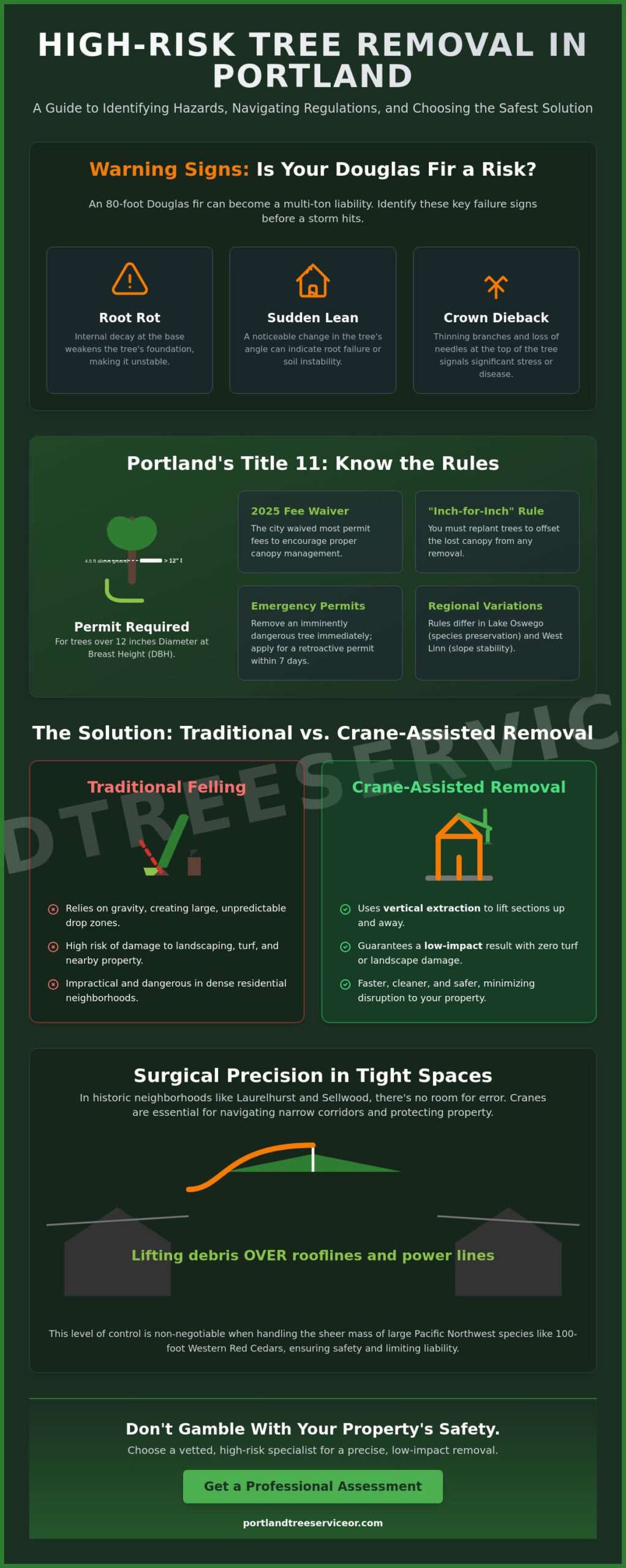
In Portland’s dense urban forest, identifying a hazardous tree involves more than spotting a dead branch. Under the 2026 urban forestry standards, a tree is classified as hazardous when it possesses a structural defect that poses an imminent risk to people or property. We utilize advanced arboricultural methods to evaluate these risks, ensuring that removals are only performed when necessary for safety. Douglas firs, the giants of our local landscape, often show specific failure signs like root rot, a sudden lean, or crown dieback, where the top of the tree begins to thin and lose needles.
A formal tree risk assessment serves as your first line of defense against unexpected property damage. By identifying internal decay before the next major storm, you can plan for a controlled extraction rather than an emergency cleanup. Diameter at Breast Height, or DBH, is the standard measurement of a tree’s trunk diameter taken at 4.5 feet above the ground, serving as the primary metric for determining permit requirements in Portland.
Navigating Portland Title 11 Permit Requirements
Portland’s Tree Code, known as Title 11, dictates that you must obtain a permit for any tree removal Portland OR involves for specimens 12 inches DBH or larger on private property. While the city waived most permit fees in July 2025 to encourage better canopy management, the regulatory oversight remains strict. Residential zones currently follow “inch-for-inch” replacement rules, meaning you must replant trees to offset the lost canopy. If a tree is actively failing and poses an immediate danger, you can proceed with removal immediately, provided you apply for a retroactive emergency permit within seven days.
Regional Challenges: Lake Oswego and West Linn Variations
Regulations shift quickly once you cross city lines. Lake Oswego maintains distinct ordinances that often prioritize specific species preservation over the general DBH thresholds found in Portland. In West Linn, canopy protection goals are tied to steep-slope stability, which can extend the timeline for permit approval. If you’re managing a project across the city border, understanding the full scope of West Linn tree removal regulations — including specific permit triggers like the 6-inch DBH rule for Oregon White Oaks and the 30-business-day application timeline — is essential to keeping your project compliant. We navigate these local nuances daily, ensuring your project remains compliant with every regional municipality’s specific standards.
The Crane Advantage: Why High-Risk Removal Requires Specialized Equipment
Traditional tree felling relies on gravity and complex rigging to guide falling debris into a designated landing zone. While this method works in open fields, it often fails in the tight residential lots common to tree removal Portland OR. High-risk situations require a more controlled approach. Crane-assisted removal utilizes vertical extraction to lift heavy sections of a tree directly into the air. This process removes the need for a large drop zone and eliminates the risk of heavy logs impacting your soil or landscaping.
Choosing low impact tree removal provides a significant advantage for your property’s long-term health. We deploy heavy-duty cranes to secure each section before it’s cut. This action results in a cleaner job site with zero turf damage and a much faster overall project timeline. Property owners often find that the efficiency of a crane reduces the total hours spent on-site, minimizing the disruption to their daily routine. If you’re facing a complex situation, our specialized crane services ensure the job’s done with surgical precision.
Precision Removal in Tight Portland Spaces
In historic neighborhoods like Laurelhurst or Sellwood, homes are often built within feet of each other. Our crane operators possess the technical precision to navigate these narrow corridors, lifting debris over rooflines and power lines with inches to spare. This level of control is essential for protecting your home and your neighbor’s property from accidental damage during a complex extraction.
Handling Large-Scale PNW Species
A 100-foot Western Red Cedar presents unique weight distribution challenges that standard ropes can’t safely manage. The sheer mass of native Pacific Northwest species makes manual rigging a high-liability endeavor. Because of these risks, commercial tree removal in Portland often mandates the use of crane technology to ensure workplace safety and limit property manager liability. We treat every large-scale removal as a precision engineering task to protect your investment.
Choosing the Best Tree Removal Service in Portland
Selecting a provider for tree removal Portland OR requires a focus on technical rank and professional longevity. A company with 30 or more years of local experience brings a level of neighborly expertise that newcomers simply cannot match. You should prioritize “Master Craftsman” level specialists who understand the structural complexities of large native species. When you review an estimate, look beyond the bottom line. A professional quote includes specific safety protocols and equipment allocations that ensure your property remains protected throughout the process.
Verifying insurance is a non-negotiable step for high-risk operations. Ensure your chosen specialist carries specific coverage for crane services and high-elevation tasks. Standard general liability policies often exclude the specific risks associated with tree removal Portland OR when vertical extraction over residential structures is required. We maintain comprehensive coverage to provide complete peace of mind, protecting your home against every possible scenario. This commitment to safety distinguishes a high-end specialist from a general landscaping laborer.
The Local Veteran Advantage
Decades of service in the Willamette Valley provide a deep understanding of local soil stability and seasonal weather patterns. A local veteran knows how Portland’s saturated winter soils affect the root systems of heavy firs. Owning a private fleet of specialized cranes ensures immediate availability and reliable performance. Relying on rented equipment can lead to scheduling delays that leave your property vulnerable during active storm cycles. Our long-standing presence in the community acts as a primary seal of authenticity for every job we undertake.
Preparing Your Property for Removal Day
Preparation starts with clearing a dedicated staging area for debris and heavy machinery. If you live in Lake Oswego or West Linn, notify your neighbors about the scheduled crane work to manage expectations regarding noise and street access. This courtesy helps maintain neighborly relations during high-impact tasks. Once the tree is removed, the final phase involves a thorough site restoration. A high-end specialist will leave your landscape clean and ready for the replanting required by Portland’s Title 11 standards.
Securing Your Property with Expert Tree Care
Managing a hazardous tree requires a balance between understanding Portland’s evolving Title 11 regulations and utilizing the highest level of technical precision. You now know that identifying early signs of failure in Douglas firs is the first step toward preventing significant property damage. By choosing vertical extraction over traditional rigging, you ensure that even the most complex removals have a minimal impact on your landscape and neighboring structures. This methodical approach protects your investment while maintaining the beauty of our local urban forest.
When you need tree removal Portland OR, relying on seasoned veterans provides the ultimate peace of mind. Our team brings over 30 years of local experience and maintains a specialized heavy-duty crane fleet to handle the most challenging Pacific Northwest species. We are ready to assist with planned projects or provide 24/7 emergency storm response, ensuring your home remains secure through every season. Trust the expertise of master craftsmen to handle your high-risk tasks with sophisticated care and disciplined safety standards.
Request a Professional Tree Removal Estimate from Portland’s Crane Experts
Frequently Asked Questions
Do I need a permit to remove a tree in my own backyard in Portland?
You need a permit if the tree on your private property measures 12 inches in diameter or larger at 4.5 feet above the ground. Portland’s Title 11 regulations apply to all trees meeting this size threshold, regardless of their location in your yard. As of 2026, the city has waived most permit fees for removal and replanting, though you’re still required to follow the formal application process to avoid significant civil penalties.
How much does tree removal cost in Portland OR for a large tree?
The total cost depends on several factors, including the tree’s height, its species, and how close it stands to your home or power lines. Large native trees like Douglas firs or Western red cedars often require more crew members and specialized equipment for a safe extraction. You should check with a local specialist for a detailed estimate that reflects the specific access challenges and safety requirements of your property.
What happens if a tree falls on my house during a storm?
Your first priority is to contact an emergency tree service to safely stabilize and remove the tree from your structure. Portland’s code allows for the immediate removal of trees that pose an active hazard without a pre-approved permit. However, you’re required to take photos of the hazard and apply for a retroactive emergency permit within seven days of the removal to stay compliant with city laws.
Can my neighbor force me to remove a leaning tree in Oregon?
A neighbor generally cannot force you to remove a tree unless it’s legally documented as a “Hazardous Tree” under local code. If the tree shows clear signs of structural failure and threatens their property, they may report it to city code enforcement for an official inspection. It’s proactive to have a veteran specialist conduct a risk assessment to document the tree’s condition and address any legitimate safety concerns before they escalate.
Is crane tree removal more expensive than traditional methods?
While crane services involve specialized machinery, the efficiency of the process often reduces the total labor hours spent on your property. Using a crane for tree removal Portland OR allows for vertical extraction, which prevents costly damage to your turf, gardens, and nearby structures. Many property owners find the precision of a crane-assisted job provides better overall value by eliminating the need for extensive landscape restoration after the project is finished.
How do I know if my Douglas fir is dying or just stressed?
Dying Douglas firs often exhibit crown dieback, where the needles at the very top turn brown and fall off, or show shelf-like fungal growth at the base. Stressed trees might lose some needles during a heatwave but will maintain their structural integrity and won’t show signs of trunk decay or significant leaning. If you’re unsure, a professional assessment is the only way to determine if you need tree removal Portland OR or if the tree can recover with time.