A single 80-foot Douglas fir positioned over a Portland home is less of a landscape feature and more of a complex rigging challenge that requires absolute precision. It’s natural to feel anxious about the potential for property damage or the confusion of navigating the city’s strict Title 11 permit codes. You want the job done right, but you also need to know that the cost to remove a large tree won’t come with hidden surprises or unexpected legal headaches. We understand the stress of managing a hazardous canopy while trying to protect your most valuable investment.
You’ll discover exactly how variables like specialized crane access and regional permit fees impact your 2026 budget while gaining the peace of mind that comes with veteran planning. We provide a realistic look at why certain equipment is non-negotiable for safety and how to secure the necessary documentation from Urban Forestry. This guide explores the technical factors behind large-scale removals and provides a clear, logical roadmap for a safe and compliant project that restores your property’s safety and your own peace of mind.
Key Takeaways
- Identify the specific height and diameter thresholds that classify a tree as “large” and require specialized crew configurations.
- Learn how crane technology minimizes property impact by lifting heavy timber over structures rather than dropping it.
- Discover the primary variables that dictate the cost to remove a large tree, including site accessibility and technical rigging challenges.
- Understand Portland’s Title 11 permit requirements to ensure your removal project is fully legal and avoids municipal fines.
- Clarify why stump grinding is typically a separate line item and how it affects your final project timeline.
Evaluating the Primary Cost Factors for Large Tree Removal
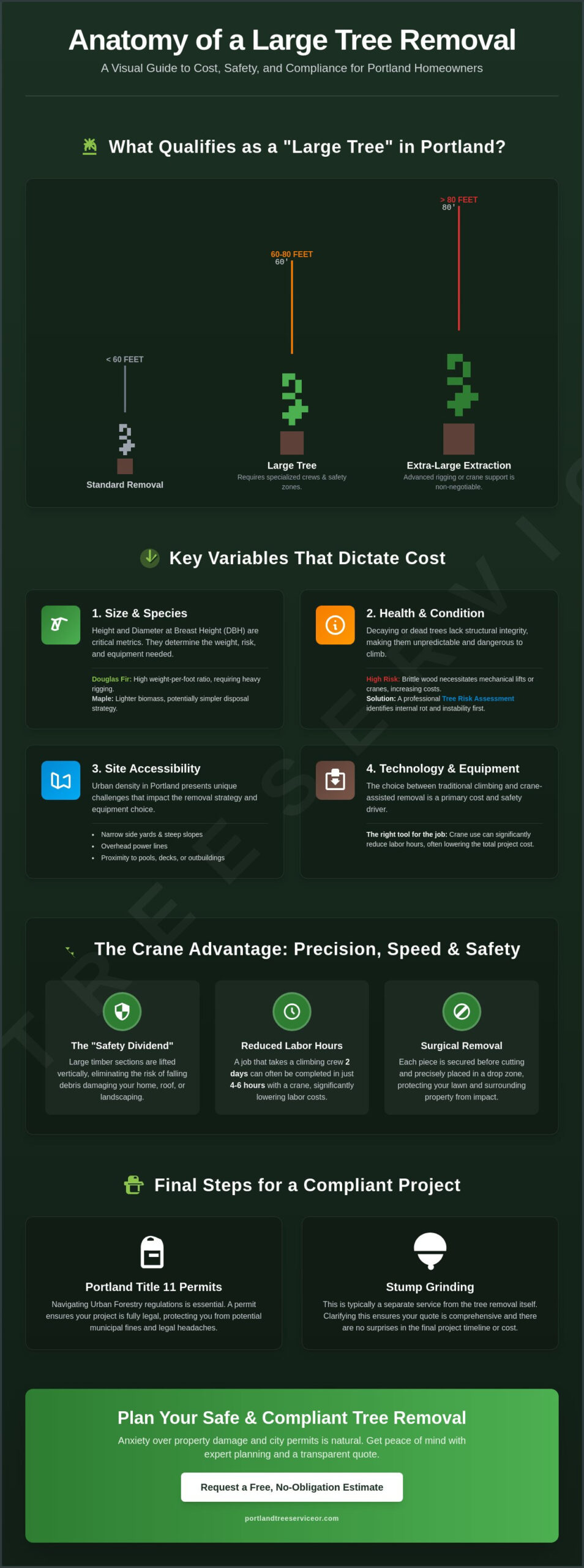
Portland’s urban canopy is renowned for its scale, but that scale introduces significant technical challenges when a tree outgrows its welcome. We typically classify a large tree as any specimen exceeding 60 feet in height or possessing a substantial trunk diameter. At this threshold, the complexity of a removal project shifts from standard landscaping to high-stakes engineering. Increased height directly correlates with higher risk profiles and the need for larger crew sizes to manage ground operations safely. The physical footprint of the job site must expand to accommodate the safety zones required for falling timber.
Species also play a critical role in project planning. A 100-foot Douglas fir presents a much higher weight-per-foot ratio than a 60-foot Maple. The sheer biomass of Pacific Northwest evergreens requires specialized disposal strategies and heavier rigging equipment. By applying professional Tree care standards, experts can dismantle these giants in sections. This methodical approach protects your home’s foundation and roofline from the impact of heavy debris.
Height and Diameter: The Baseline of Every Quote
While height is the most visible factor, Diameter at Breast Height (DBH) is often the more critical metric for determining the cost to remove a large tree. DBH dictates the weight of the logs and the capacity of the rigging systems required to lower them. Large-scale extractions are categorized by their height tiers, such as 60 to 80 feet versus those exceeding 80 feet. “In the Pacific Northwest, a tree over 80 feet is considered an extra-large extraction requiring advanced rigging or crane support.” This specialized equipment is essential for managing the extreme loads associated with mature Portland timber.
Tree Health and Structural Integrity
A tree’s health significantly impacts the removal strategy and the overall cost to remove a large tree. Dead or decaying trees are often more dangerous to handle because the wood has lost its predictable structural strength. When a tree is too brittle to climb safely, we must use mechanical lifts or cranes to reach the upper canopy. Conducting a professional tree risk assessment allows us to identify internal rot or unstable root systems before work begins. This diagnostic approach results in a safer work site by matching the heavy machinery to the tree’s actual condition.
How Crane Technology and Site Accessibility Affect Your Quote
Choosing the right equipment is the difference between a multi-day ordeal and a single day of efficient work. While traditional climbing is a foundational skill, utilizing a crane tree removal service is often the superior choice for massive specimens. This technology allows us to lift large sections of the canopy vertically. We avoid the risks of dropping heavy limbs near your roofline or windows. This “Safety Dividend” ensures that your property remains untouched while we dismantle the tree from the top down. Precision rigging protects your investment during every phase of the extraction.
Many homeowners assume that bringing in heavy machinery will automatically inflate the total cost to remove a large tree. In reality, a crane often reduces the final bill by cutting labor hours in half. What might take a climbing crew two days to rig and lower can often be completed in four to six hours with a crane. This efficiency lowers the cost of tree removal by minimizing the time specialized staff must spend on-site. It’s a strategic investment that trades manual labor for mechanical precision.
The Role of Specialized Equipment in High-Risk Removal
A crane enables “surgical” removal of the canopy. We secure a section of the tree to the hook before the cut is even made. Once severed, the crane lifts the piece clear of all obstacles and places it directly into a designated drop zone. This process protects your lawn and landscaping from the compaction and impact damage common with traditional felling methods. It’s a methodical approach that prioritizes the structural integrity of your surrounding assets and your peace of mind.
Accessibility Challenges in Urban Portland
Urban density in neighborhoods like Lake Oswego or Northwest Portland creates unique hurdles. Power lines, narrow side yards, and steep slopes often limit where we can position equipment. In “no-go” zones where a crane cannot reach, we deploy advanced rigging systems to move timber safely. Backyard removals in West Linn often require these specialized solutions to navigate around pools or outbuildings. If you’re facing a complex removal in a tight space, it’s wise to consult with a veteran removal specialist to evaluate your site’s specific logistics and safety requirements.
Beyond the Cut: Permits, Stump Grinding, and Local Portland Regulations
Completing the physical extraction of a 70-foot fir is a significant milestone, but the administrative and finishing phases often carry their own logistical weight. Navigating the legal landscape is essential for any property owner in the Pacific Northwest. Portland’s Title 11 Tree Code requires a permit for removing any tree 12 inches in diameter or larger on private property. Understanding the Oregon tree removal laws ensures your project remains compliant with municipal standards and avoids costly civil penalties. These regulations protect the city’s canopy while providing a clear framework for hazardous tree management.
The total cost to remove a large tree often includes variables that occur after the main trunk is on the ground. Debris disposal is a major factor, as a mature evergreen can produce several tons of wood and foliage. Industry data suggests that comprehensive site cleanup and hauling typically add 15 to 25 percent to the base project price. Proper disposal requires heavy-duty equipment and weight-based tipping fees at local processing facilities. Planning for these post-removal steps prevents budget surprises and ensures your property is left in pristine condition.
Navigating Portland’s Tree Permit and Mitigation Fees
Permit fees for the City of Portland Urban Forestry typically range from $50 to $250 for standard private property applications. If the city determines that a tree must be replaced but the site lacks adequate space, you may encounter mitigation fees. These fees fund the planting of trees elsewhere in the city to maintain the overall urban forest. Securing the correct documentation before the crew arrives is the best way to keep your project on schedule and within your planned budget.
Post-Removal Services: Stumps and Site Cleanup
Stump grinding is almost always treated as a separate line item because it requires distinct machinery and expertise. A 24-inch stump is a straightforward task, but a 48-inch stump from an ancient cedar involves a massive root system and significantly more labor. Thorough site cleanup also impacts the final total. Removing every wood chip and log requires additional man-hours compared to projects where the homeowner keeps the wood for fuel. Clear communication regarding your expectations for the final site appearance helps your specialist provide an accurate quote.
To secure a precise project map and protect your property from the risks of large-scale extraction, we recommend requesting a crane tree removal service estimate. A veteran team provides the technical discipline needed to handle Portland’s biggest trees safely and efficiently.
Secure Your Property with Professional Precision
Managing a massive tree removal in Portland requires more than just a saw. It’s about engineering a safe path for thousands of pounds of timber while protecting your home’s foundation. We’ve discussed how technical rigging and crane efficiency transform a high-risk job into a controlled operation. Navigating the permit process ensures your project remains legal and preserves the health of our local urban forest. These steps aren’t just administrative hurdles; they’re essential safeguards for your investment.
Determining the final cost to remove a large tree involves weighing these technical variables against the long-term safety of your landscape. With over 30 years of Portland tree care experience, our locally owned team uses specialized heavy-duty crane equipment to handle the most challenging extractions. We’re fully insured and committed to the highest standards of safety and workmanship. Get a Professional Crane-Assisted Removal Estimate today to secure your property with veteran expertise. You’ve worked hard to maintain your home, and we’re ready to help you keep it safe for years to come.
Frequently Asked Questions
Is it cheaper to remove a tree in the winter in Portland?
Winter is often the most cost-effective time for planned removals because the dormant season allows for easier access and lower demand for non-emergency work. Deciduous trees have dropped their leaves; this reduces the weight and debris volume during disposal. However, you don’t want to wait for major ice storms or high-wind events. These conditions trigger a surge in emergency tree service requests, which typically command higher rates due to the immediate hazard and difficult working conditions.
Does homeowners insurance cover the cost of removing a large tree?
Standard homeowners insurance policies typically only cover the cost to remove a large tree if it has already fallen and caused damage to a covered structure, such as your roof or garage. Most providers don’t pay for preventative removals, even if the tree appears dead or leans toward your house. If a healthy tree falls due to a covered peril like a storm, your policy might cover the extraction. It’s always best to review your specific policy limits with your insurance agent before a hazard occurs.
How much does a tree removal permit cost in Portland for 2026?
For the 2026 season, City of Portland permit fees for private property tree removals typically range from $50 to $250 depending on the specific application type. This fee covers the administrative review by Urban Forestry to ensure the removal complies with Title 11 regulations. If you don’t replant a tree as required by the city, you may also be subject to mitigation fees. These costs are separate from the actual labor and equipment used during the removal process.
Why is removing a large tree so much more expensive than a medium one?
Removing a large tree involves exponential increases in risk, equipment requirements, and crew size compared to smaller specimens. While a medium tree might be safely dismantled by a climbing crew, a large-scale extraction often requires a specialized crane to lift massive timber sections over your home. The sheer weight of the wood increases disposal fees, and the technical rigging needed to protect your property requires a higher level of professional expertise. Every additional 10 feet of height adds significant complexity to the safety plan.