Imagine a storm-battered Douglas fir leaning precariously over your Portland home, its roots shifting with every gust of wind. You know the tree needs to come down, but the thought of a crew dropping heavy limbs near your roof or dragging equipment across your lawn is enough to cause a headache. It’s a common stress for local property owners who value their landscape. You want a solution that prioritizes safety without turning your yard into a loud, messy construction zone for several days.
When you understand the professional benefits of crane tree removal, that anxiety starts to fade. This method is essentially surgical, lifting sections of the tree vertically to eliminate the traditional risks of gravity-based felling. In this article, you’ll discover how crane-assisted extraction protects your landscape, increases safety for everyone on-site, and saves significant time on complex projects. We will walk through why utilizing specialized equipment is the most reliable way to handle hazardous removals while keeping your property perfectly intact.
Key Takeaways
- Discover how “surgical” vertical lifting eliminates the unpredictable risks associated with traditional tree felling by securing sections before a single cut is made.
- Learn why specialized equipment and protective mats are essential for keeping your flower beds and irrigation systems safe from heavy impact.
- See how the benefits of crane tree removal include massive time savings; often completing in four hours what takes manual crews two days to finish.
- Find out how professional crane operators reduce site disruption and provide total peace of mind during complex or hazardous extractions.
Maximum Safety and Precision: Why Cranes Outperform Traditional Tree Felling
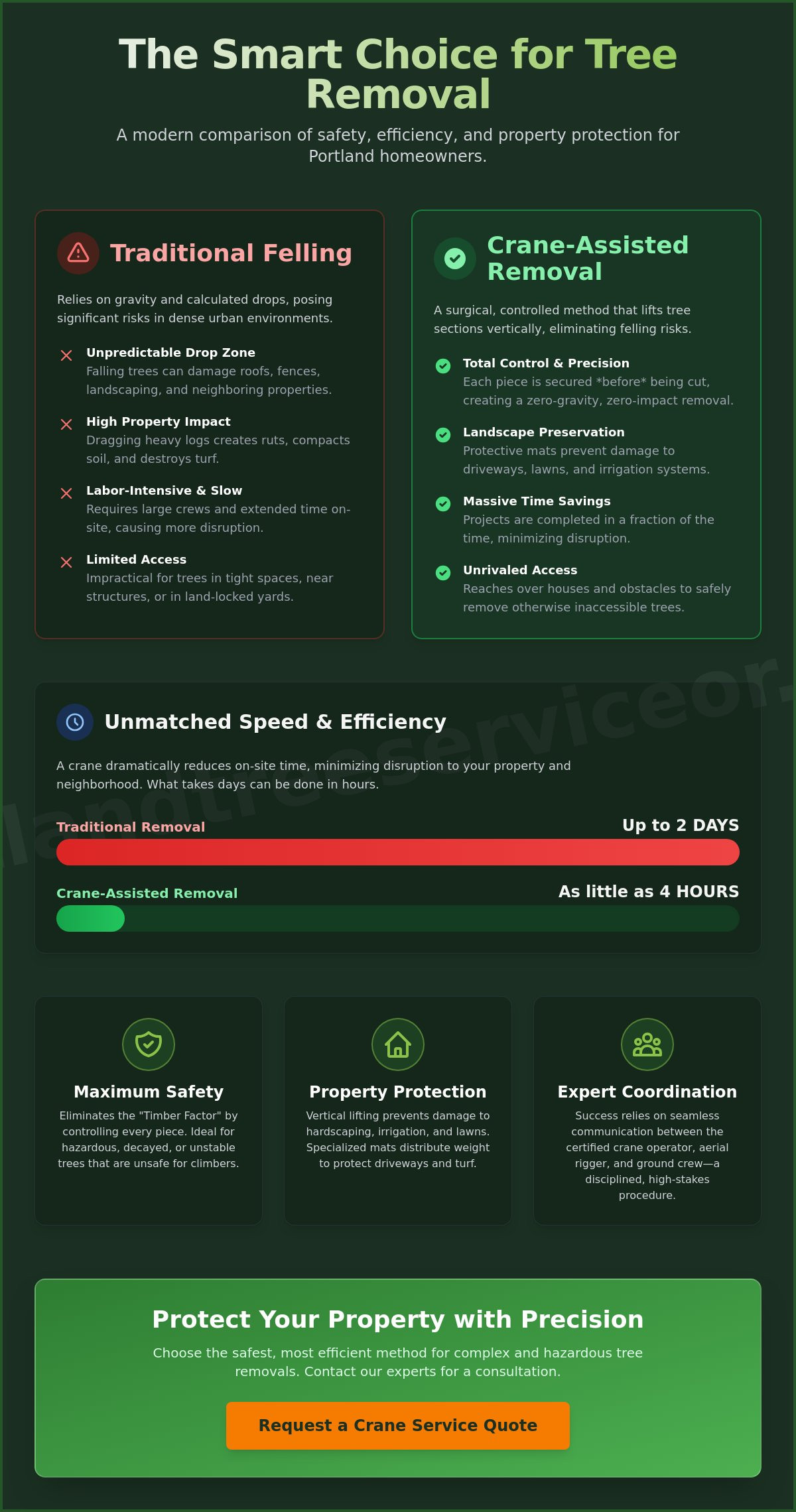
Traditional tree felling relies on gravity and hope. In the dense neighborhoods of Portland, where houses often sit just feet apart, a standard “timber” fall is a high-stakes gamble. Crane tree removal transforms this process into a controlled “pick-and-drop” operation. Instead of allowing a tree to fall, we secure every section to a crane before the cut is even made. This surgical approach eliminates the unpredictable variables of wind and weight distribution that often lead to property damage.
The primary benefits of crane tree removal center on this total control. By lifting sections vertically, we remove the “drop zone” entirely. This protects your roof, your neighbors’ fences, and the surrounding landscape from falling debris. Professional Arboriculture requires managing these high-stakes risks with technical precision rather than brute force. We also see a significant reduction in worker fatigue during these projects. When crews don’t have to physically wrestle with massive logs on the ground, they remain sharper and more focused on the safety of your property.
Eliminating the ‘Timber’ Factor in High-Risk Zones
Zero-gravity removal is the specialized process of lifting tree sections vertically to prevent any impact with the ground. This method is vital for hazardous trees that are too decayed or unstable for a climber to scale safely. We can extract these dangerous specimens without ever putting a person’s weight on a compromised trunk, ensuring the tree is dismantled safely from the top down. If you want to understand exactly how a tree is removed with a crane step by step, our detailed precision extraction guide walks through every phase of the process.
The Role of the Certified Crane Operator and Rigger
Success in these operations depends on the seamless synergy between the ground crew, the crane operator, and the aerial rigger. Every movement is coordinated through precise signals and constant communication. With over 30 years of experience managing these high-stakes extractions, we’ve refined the communication patterns that ensure every “pick” is executed flawlessly. This level of master craftsmanship turns a high-risk removal into a routine, disciplined procedure that prioritizes the integrity of your home.
Protecting Your Landscape: The Low-Impact Advantage for Portland Yards
Traditional tree removal often leaves a “footprint” of destruction. Falling limbs can crush irrigation systems while heavy logs gouge deep ruts into the soil. One of the standout benefits of crane tree removal is the elimination of these chaotic drop zones. In communities like Lake Oswego and West Linn, where massive Douglas firs often tower over manicured gardens and expensive hardscaping, precision is mandatory. We lift the tree away rather than dropping it down.
Many homeowners worry that bringing a crane onto the property will ruin the driveway or lawn. We mitigate this risk by using specialized outrigger pads and heavy-duty protective mats to distribute weight evenly across the surface. This thoughtful approach prevents cracking and sinking, even when we’re handling the massive weight of a mature fir. It’s about protecting your investment while removing the hazard.
Navigating Tight Urban Spaces and Lot Lines
Portland’s residential lots are often narrow and land-locked. A crane allows us to reach over a house or a neighbor’s fence to access trees that would otherwise be unreachable for standard equipment. This surgical reach means we don’t need to drag debris through your side yard or block traffic on narrow residential streets for days at a time. The process is clean, contained, and respectful of your neighbors’ space.
Preventing Soil Compaction and Turf Damage
During the Pacific Northwest’s rainy season, the ground is soft and easily damaged. Traditional removals involve dragging heavy wood across the lawn, which causes severe soil compaction and turf death that can take years to repair. Vertical lifting avoids this entirely. Our specialized equipment is designed to minimize the property footprint, ensuring your landscape remains as pristine as possible. If you are dealing with a hazardous situation, our expert crane services provide the protection your yard deserves.
Efficiency and Cost-Effectiveness: Is Crane Assisted Removal Worth the Investment?
Many property owners view specialized equipment as an added expense. However, the true benefits of crane tree removal lie in the massive reduction of on-site labor and risk. While a traditional climbing crew might spend two full days dismantling a large tree, a crane often completes the same task in just four hours. This speed minimizes the time that heavy equipment sits in your driveway and reduces the overall noise and disruption for your neighbors. It’s an efficient solution that respects your schedule and your property’s tranquility.
Choosing a crane isn’t just about speed; it’s about total project control. By reducing the number of man-hours required on-site, we decrease the window for potential accidents or weather-related delays. This streamlined approach allows us to focus on the technical precision of the extraction rather than the logistics of moving debris by hand across your yard. It’s a professional standard that prioritizes results and safety above all else. Understanding how a tree is removed with a crane and the safety protocols involved can help you feel confident in choosing this method for your property.
Reducing Project Timelines from Days to Hours
Consider a hypothetical removal of a 100-foot Douglas fir. In a traditional scenario, a climber must ascend the tree, rig individual limbs, and lower them slowly to avoid obstacles. With a crane, we make fewer, larger cuts and lift the sections directly to the processing area. This “clean” workflow ensures that debris never touches your lawn and moves directly to the chipper. You can see this efficiency in action in our Large Tree Removal in Portland: A Crane-Assisted Case Study.
Avoiding the Hidden Costs of Collateral Damage
Choosing a crane is essentially a smart insurance policy for your home. A single dropped limb can cause thousands of dollars in damage to a roof, fence, or underground utility line. When you weigh the cost of professional crane services against the potential price of property repairs and insurance deductibles, the specialized approach is the most fiscally responsible choice. For high-value Portland properties, it’s the most effective way to preserve your landscape’s long-term value while eliminating hazardous trees with absolute certainty.
Secure Your Property with Surgical Precision
Removing a hazardous tree doesn’t have to be a source of stress or property damage. By choosing a crane-assisted method, you replace the unpredictable nature of traditional felling with a disciplined, vertical extraction. This approach ensures your home remains safe while your landscape stays pristine. You’ve seen how this technology protects your investment and turns a multi-day project into a single morning of efficient, controlled work.
The core benefits of crane tree removal extend beyond simple speed. It’s about the peace of mind that comes from working with seasoned veterans who prioritize your property’s integrity. With over 30 years of local experience in the Pacific Northwest, we utilize specialized low-impact equipment and maintain full licensing for high-risk crane operations. We treat every yard with the respect it deserves, ensuring that the only thing leaving your property is the hazard itself.
Ready to protect your home and landscape? Request a Professional Crane Tree Removal Estimate in Portland today. Our team is here to provide the expert, reliable service your property needs.
Frequently Asked Questions
How much space does a crane need for tree removal in a typical Portland driveway?
A crane generally requires a clear, level area approximately 12 to 15 feet wide to safely deploy its stabilizing outriggers. We carefully evaluate overhead obstacles like power lines and low-hanging branches before positioning the equipment. Our team specializes in navigating the tight residential streets of Portland, ensuring the crane is stabilized without obstructing traffic or encroaching on your neighbor’s property lines.
Will the weight of the crane crack my driveway or sidewalk?
We use specialized high-density polyethylene (HDPE) mats and large outrigger pads to protect your driveway from cracking. These tools distribute the machine’s weight over a much larger surface area, which prevents the concentrated pressure that damages concrete or asphalt. Protecting your hardscaping is one of the primary benefits of crane tree removal, as it avoids the heavy impact of falling logs and the stress of traditional equipment.
Is crane tree removal safer than traditional climbing methods?
Yes, crane-assisted removal is the safest method because it eliminates the unpredictable “drop zone” associated with falling debris. Traditional climbing requires a rigger to scale the tree and drop limbs, which places immense stress on the trunk and the crew. A crane allows us to lift sections vertically and move them directly to a processing area, keeping our team on the ground and your home out of harm’s way.
Do I need a special permit for crane-assisted tree removal in Portland?
Portland’s tree code, Title 11, requires a permit based on the size of the tree rather than the equipment used to remove it. If a tree on private property is 12 inches in diameter or larger at 4.5 feet above the ground, you must obtain a permit before work begins. For street trees, a permit is always mandatory. We recommend checking the current City of Portland regulations to ensure your project remains in full legal compliance.